Effect of Flow Rate on Hexavalent Chromium Reduction in Electroplating Wastewater Using TiO2 Immobilized Resin
DOI:
https://doi.org/10.25273/cheesa.v8i2.23102.76-85Keywords:
Cr6+ reduction, flow rate, electroplating, photocatalyst, TiO2Abstract
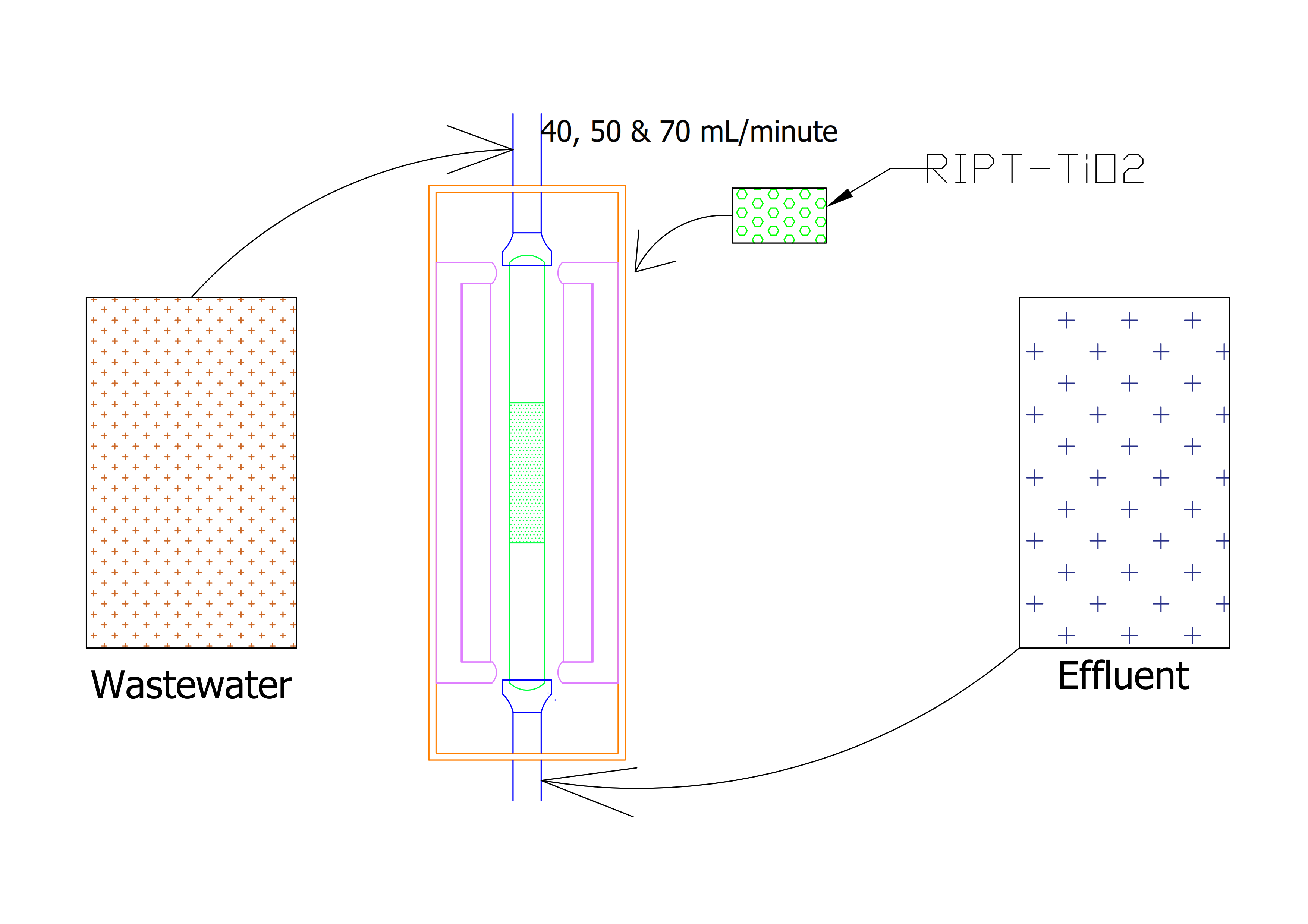
This study aims to analyze the effect of flow rate on the reduction of hexavalent chromium (Cr6+) in electroplating wastewater treated with a TiO2-immobilized resin in a continuous fixed-bed reactor. The electroplating wastewater, characterized by Cr6+, was treated with RIPT-TiO2 functioning as a catalyst to enhance the contaminant degradation process. The flow rate was then examined to observe the effect on the reduction of Cr6+ concentration during the reaction. The results showed that increasing the flow rate within the range of 4070 mL/min affected the reduction of Cr6+, and ultimately influenced the photocatalytic efficiency. The flow rate affected the contact time between the wastewater and the catalyst. The best removal efficiency, reaching 50.83% at 180 minutes, was obtained at a lower flow rate. This study provides important contributions to the development of sustainable and efficient electroplating wastewater treatment technology using a continuous reactor system with a TiO2-immobilized resin.

References
[8] Fiqri, R. (2025). Pemanfaatan Adsorben Berbahan Plastik Polyethelene Terepthalate (PET) untuk Menyisihkan Logam Mangan pada Air Tanah Asli pada Variasi Ukuran Adsorben. Universitas Andalas.
[9] Arief, I. L., Hasanuddin, H., & Asri, A. (2021). Sintesis Fotokatalis TiO2 pada Material Penyangga. Prisma Fisika, 9(3), 293. doi: https://doi.org/10.26418/pf.v9i3.51439
[17] Prasetiyo, A. A., Kinasih, M. Y., & Qodiahtadavi, M. Q. (2024). Pengaruh Proses Iradiasi Gamma terhadap Penurunan Kadar Kromium dalam Limbah Cair Elektroplating. Kohesi: Jurnal Multidisiplin Saintek, 2(8).
[18] Nurjanah, A. (2019). Penyisihan Cr(VI) dalam Perairan Melalui Proses Fotokatalitik Reduksi Menggunakan Asam Oksalat dari Tongkol Jagung (zea mays). Universitas Brawijaya.
[19] Islammiyati, A., Azwar, A., & Asri, A. (2023). Studi Pengaruh Penyinaran Lampu Ultraviolet pada Kinerja Fotodegradasi Metilen Biru Berfotokatalis TiO2. Prisma Fisika, 10(3), 430. doi: https://doi.org/10.26418/pf.v10i3.60647
[22] Li, B., Zou, R., Su, Y., & Zhang, Y. (2023). A Hybrid Subnano Cluster Electrocatalysis Process For Recalcitrant Wastewater Treatment. Separation and Purification Technology, 304, 122372. doi: https://doi.org/10.1016/j.seppur.2022.122372
[33] Adnan, F., Hidayat, R. K., & Meicahayanti, I. (2022). Pengaruh pH, UV dan TiO2 untuk Mendegradasi Variasi Asam Humat Berbasis Fotokatalis. Jurnal Teknologi Lingkungan UNMUL, 5(2), 9. doi: https://doi.org/10.30872/jtlunmul.v5i2.7002
Downloads
Published
How to Cite
Issue
Section
License
Copyright (c) 2025 CHEESA: Chemical Engineering Research Articles

This work is licensed under a Creative Commons Attribution-NonCommercial-ShareAlike 4.0 International License.
- Previous License: Creative Commons Attribution-NonCommercial-ShareAlike (CC BY-NC-SA)
- New License: Creative Commons Attribution (CC BY 4.0)
Previous copyright: With the receipt of the article by CHEESA Editorial Board and the decision to be published, the copyright regarding the article will be transferred to CHEESA Journal. CHEESA has the right to multiply and distribute the article and every author is not allowed to publish the same article that was published in this journal.
New Copyright: Authors who publish with this journal agree to the following terms:
Authors retain copyright and grant the journal right of first publication with the work simultaneously licensed under a Creative Commons Attribution License (CC BY 4.0) that allows others to share the work with an acknowledgement of the work's authorship and initial publication in this journal.


