Nanoparticles and Nanoliposomes for Hair Growth Serum
DOI:
https://doi.org/10.25273/cheesa.v7i1.19908.57-66Keywords:
chemical aggregation, dispersion, nanoliposomes, nanoparticles, serumAbstract
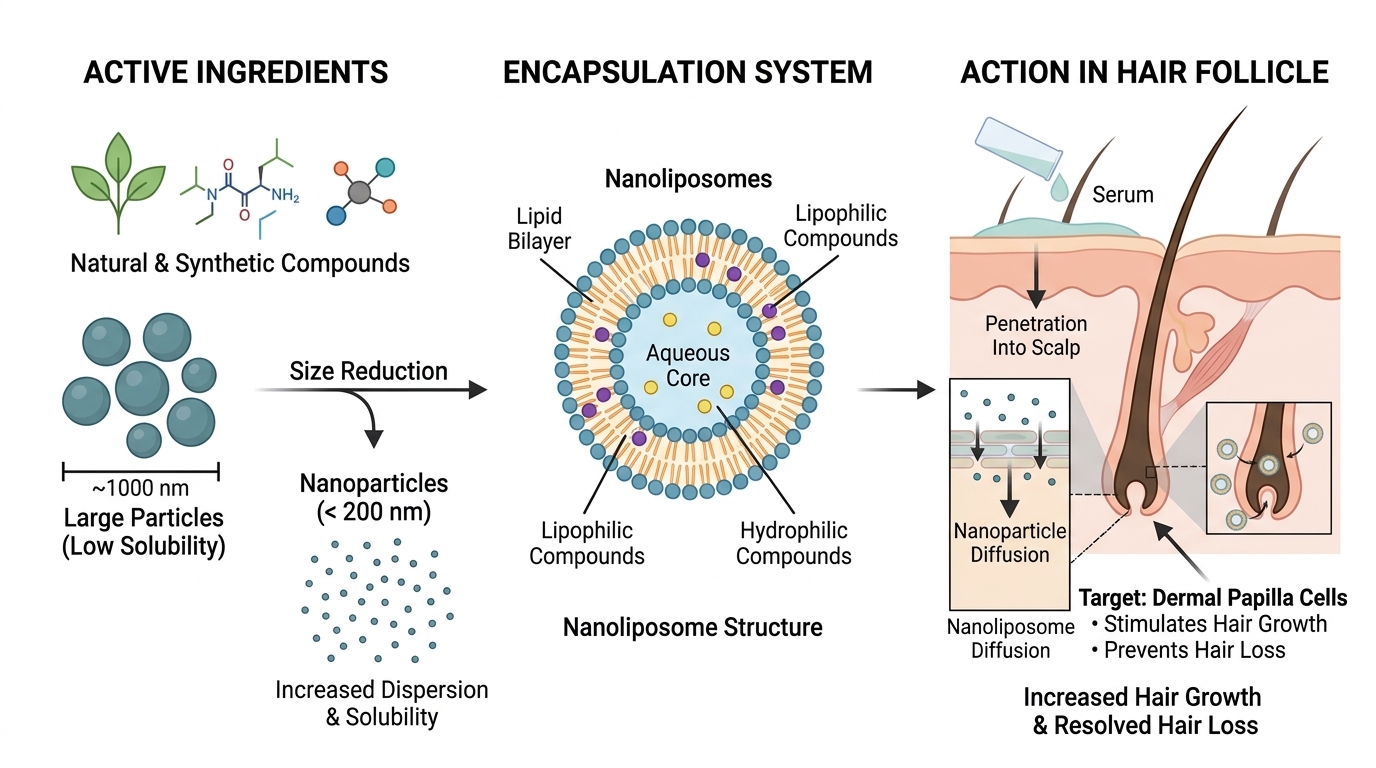
Solubility in penetrating the follicles is the main obstacle in the formulation of hair growth serum preparation with chemicals derived from natural or synthetic materials. Therefore, a delivery system is needed to deliver more chemical compounds into the follicles. Nanoparticles and nanoliposomes are potential chemical compound delivery systems in hair growth serum. Specifically, nanoparticles with a particle size of less than 200 nm can increase the transport of serum chemical compounds into the scalp. The small particle size makes the interaction between atoms and molecules faster and prevents clumping with the repulsive force of dispersed particles. Meanwhile, nanoliposomes with lipids as encapsulation in the delivery of lipophilic or hydrophilic chemical compounds with nanosizes can significantly increase serum diffusion on the scalp.

References
[1] Majeed, M., Majeed, S., Nagabhushanam, K., Mundkur, L., Neupane, P., & Shah, K. (2020). Clinical study to evaluate the efficacy and safety of a hair serum product in healthy adult male and female volunteers with hair fall. Clinical, Cosmetic and Investigational Dermatology, 13, 691–700. doi: 10.2147/CCID.S271013
[2] Bubalo, M. C., Vidović, S., Redovniković, I. R., & Jokić, S. (2018). New perspective in extraction of plant biologically active compounds by green solvents. Food and Bioproducts Processing, 109, 52–73. doi: 10.1016/J.FBP.2018.03.001
[3] Vaishampayan, P., & Rane, M. M. (2022). Herbal Nanocosmecuticals: A Review On Cosmeceutical Innovation. Journal of Cosmetic Dermatology, 21(11), 5464–5483. doi: 10.1111/JOCD.15238
[4] Patzelt, A., & Lademann, J. (2020). Recent advances in follicular drug delivery of nanoparticles. Expert Opinion on Drug Delivery, 17(1), 49–60. doi: 10.1080/17425247.2020.1700226
[5] Alishiri, M., Ebrahimi, S., Shamloo, A., Boroumand, A., & Mofrad, M. R. K. (2021). Drug delivery and adhesion of magnetic nanoparticles coated nanoliposomes and microbubbles to atherosclerotic plaques under magnetic and ultrasound fields. Engineering Applications of Computational Fluid Mechanics, 15(1), 1703–1725. doi: 10.1080/19942060.2021.1989042
[6] Eid, K. A. M., & Azzazy, H. M. E. (2014). Sustained broad-spectrum antibacterial effects of nanoliposomes loaded with silver nanoparticles. Nanomedicine (Lond), 9(9), 1301–1310. doi: 10.2217/NNM.13.89
[7] Cheraghi, M., Negahdari, B., Daraee, H., & Eatemadi, A. (2017). Heart Targeted Nanoliposomal/Nanoparticles Drug Delivery: An Updated Review. Biomedicine & Pharmacotherapy, 86, 316–323. doi: 10.1016/J.BIOPHA.2016.12.009
[8] Bonifácio, B. V., Silva, D. P. B., Ramos, M. A. D. S., Negri, K. M. S., Bauab, M. T., & Chorilli, M. (2013). Nanotechnology-based drug delivery systems and herbal medicines: A Review. International Journal of Nanomedicine, 9(1), 1–15. doi: 10.2147/IJN.S52634
[9] Pulit-Prociak, J., Grabowska, A., Chwastowski, J., Majka, T. M., & Banach, M. (2019). Safety of the application of nanosilver and nanogold in topical cosmetic preparations. Colloids and Surfaces B: Biointerfaces, 183, 110416. doi: 10.1016/J.COLSURFB.2019.110416
[10] Mondéjar-López, M., López-Jiménez, A. J., Abad-Jordá, M., Rubio-Moraga, A., Ahrazem, O., Gómez-Gómez, L., & Niza, E. (2021). Biogenic Silver Nanoparticles From Iris Tuberosa As Potential Preservative In Cosmetic Products. Molecules, 26(15), 1–12. doi: 10.3390/Molecules26154696
[11] Lee, H. J., Kwon, H. K., Kim, H. S., Kim, M. Il, & Park, H. J. (2019). Hair Growth Promoting Effect Of 4HGF Encapsulated With PGA Nanoparticles (PGA-4HGF) by Β-Catenin Activation and its Related Cell Cycle Molecules. International Journal of Molecular Sciences, 20(14). doi: 10.3390/Ijms20143447
[12] Amnuaikit, T., Rajagopal, R. S., Nilsuwan, K., & Benjakul, S. (2024). Enhancement of physical appearance, skin permeation, and odor reduction using liposome of hydrolyzed salmon collagen for cosmetic products. Scientifica, 2024, 7843660, 14 pages
[13] Rehman, F. U. (2019). Scope of nanotechnology in cosmetics: dermatology and skin care products. J. Med. Chem. Sci., (September 2018). doi: 10.26655/Jmchemsci.2019.6.2
[14] Randad, M., Shrinivas, S., & Bachelor, H. L. D. (2022). Preparation and evaluation of hair serum. International Journal of Advances in Engineering and Management, 4(6), 2389.
[15] Hidayah, H., Kusumawati, A. H., Sahevtiyani, S., & Amal, S. (2021). Literature review article: aktivitas antioksidan formulasi serum wajah dari berbagai tanaman. Journal of Pharmacopolium, 4(2), 75–80.
[16] Sawiji, R. T., Rumbory, S., Pramita, D. A., Cahyaningrum, W., Fanny, N. P., Dewi, S., … Mahaganesha, F. (2024). Pengaruh variasi konsentrasi gelling agent (xanthan gum dan carbopol) pada sediaan serum dengan bahan aktif retinoic acid. Acta Holistica Pharmaciana, 6(1), 1–10. doi: 10.62857/AHP.V6I1.157
[17] Hermawan, A. V., & Susanti, A. (2022). Serum kulit manggis dan beras putih sebagai antiaging dan brightening. Garina, 14(1), 43–60. Retrieved from https://garina.org/index.php/journal/article/view/57
[18] Satrianingrum, A., Sari, G. K., & Pistanty, M. A. (2023). Serum Antibacterial Activity Test of Chinese Betel Extract (Peperomia Pellucida) Against Staphylococcus Aureus Bacteria. Pratama Medika : Jurnal Kesehatan, 2(1), 66–82. doi: 10.56480/PRATAMAMEDIKA.V2I1.938
[19] Baptista, S., Pereira, J. R., Guerreiro, B. M., Baptista, F., Silva, J. C., & Freitas, F. (2023). Cosmetic emulsion based on the fucose-rich polysaccharide fucopol: bioactive properties and sensorial evaluation. Colloids and Surfaces B: Biointerfaces, 225, 113252. doi: 10.1016/J.COLSURFB.2023.113252
[20] Syarifah, A., Budiman, A., & Nazilah, S. A. (2021). Formulation And Antioxidant Activity Of Serum Gel Of Ethyl Acetate Fraction From Musa X Paradisiaca L. Proceedings of The 4th International Conference On Sustainable Innovation 2020–Health Science and Nursing (Icosihsn 2020), 33, 310–315. doi: 10.2991/AHSR.K.210115.066
[21] Wijianto, B., & Pratiwi, L. (2024). Serum of extract onchidium typhae uses hydroxyethyl cellulose and carboxymethyl cellulose natrium base as antioxidant. Medical Sains : Jurnal Ilmiah Kefarmasian, 9(1), 363–372. doi: 10.37874/MS.V9I1.1113
[22] Article, O., Noralita, K., Gumilar, B., Yuliani, H., & Dwiastuti, R. (2023). Optimization and physical characterization of quercetin nanoemulgel formula as an antibacterial agent. International Journal of Applied Pharmaceutics. doi: 10.22159/Ijap.2023v15i1.46737
[23] Nabilla, C. N., Andriyanto, & Subangkit, M. (2024). View of efek potensial sari buah apel (malus domestica) sebagai penumbuh rambut pada tikus (Rattus Norvegicus). Jurnal Veteriner dan Biomedis. 2(1), 29-34. doi: 10.29244/jvetbiomed.2.1.29-34.
[24] Collins, E., Rollando, & Monica, E. (2023). View Of Pembuatan Serum Penumbuh Rambut Kombinasi Minyak Kemiri (Aleurites Moluccanus) Dan Ekstrak Buah Apel (Pyrus Malus L.). Jurnal Farmasi Ma Chung: Sains Teknologi Dan Klinis Komunitas. 1(1), 32-41. doi: 10.33479/jfmc.v1i(1).6
[25] Dahiya, M., & Dureja, H. (2018). Recent developments in the formulation of nanoliposomal delivery systems. Current Nanomaterials, 3(2), 62–74. doi: 10.2174/2405461503666180821093033
[26] Stark, W. J., Stoessel, P. R., Wohlleben, W., & Hafner, A. (2015). Industrial Applications Of Nanoparticles. Chemical Society Reviews, 44(16), 5793–5805. doi: 10.1039/C4CS00362D
[27] Bhatia, S. (2016). Nanoparticles types, classification, characterization, fabrication methods and drug delivery applications. Natural Polymer Drug Delivery Systems, 33–93. doi: 10.1007/978-3-319-41129-3_2
[28] Hickey, J. W., Santos, J. L., Williford, J. M., & Mao, H. Q. (2015). Control Of Polymeric Nanoparticle Size To Improve Therapeutic Delivery. Journal of Controlled Release, 219, 536–547. doi: 10.1016/J.JCONREL.2015.10.006
[29] Schneider-Futschik, E. K., & Reyes-Ortega, F. (2021). Advantages And Disadvantages Of Using Magnetic Nanoparticles For The Treatment Of Complicated Ocular Disorders. Pharmaceutics, 13(8), 1–16. doi: 10.3390/Pharmaceutics13081157
[30] Alim, S., Vejayan, J., Yusoff, M. M., & Kafi, A. K. M. (2018). Recent uses of carbon nanotubes & gold nanoparticles in electrochemistry with application in biosensing: A Review. Biosensors and Bioelectronics, 121, 125–136. doi: 10.1016/J.BIOS.2018.08.051
[31] Bilan, R., Nabiev, I., & Sukhanova, A. (2016). Quantum dot-based nanotools for bioimaging, diagnostics, and drug delivery. Chembiochem, 17(22), 2103–2114. doi: 10.1002/CBIC.201600357
[32] Carvalho, M. R., Reis, R. L., & Oliveira, J. M. (2020). Dendrimer nanoparticles for colorectal cancer applications. Journal of Materials Chemistry B, 8(6), 1128–1138. doi: 10.1039/C9tb02289a
[33] Jamkhande, P. G., Ghule, N. W., Bamer, A. H., & Kalaskar, M. G. (2019). Metal nanoparticles synthesis: an overview on methods of preparation, advantages and disadvantages, and applications. Journal of Drug Delivery Science and Technology, 53, 101174. doi: 10.1016/J.JDDST.2019.101174
[34] Miere, F., Fritea, L., Cavalu, S., & Vicaș, S. I. (2020). Formulation, characterization, and advantages of using liposomes in multiple therapies. Pharmacophore, 11(3–2020), 1–12. Retrieved from https://pharmacophorejournal.com/article/formulation-characterization-and-advantages-of-using-liposomes-in-multiple-therapies?html
[35] Demirci, M., Caglar, M. Y., Cakir, B., & Gülseren, I. (2017). Encapsulation By Nanoliposomes. Nanoencapsulation Technologies for the Food and Nutraceutical Industries, 74–113. doi: 10.1016/B978-0-12-809436-5.00003-3
[36] Khorasani, S., Danaei, M., & Mozafari, M. R. (2018). Nanoliposome technology for the food and nutraceutical industries. Trends In Food Science & Technology, 79, 106–115. doi: 10.1016/J.TIFS.2018.07.009
[37] Kocic, H., Stankovic, M., Tirant, M., Lotti, T., & Arsic, I. (2020). Favorable effect of creams with skimmed donkey milk encapsulated in nanoliposomes on skin physiology. Dermatologic Therapy, 33(4), E13511. doi: 10.1111/DTH.13511
[38] Saewan, N., Jimtaisong, A., Panyachariwat, N., & Chaiwut, P. (2023). In Vitro and In Vivo Anti-Aging Effect of Coffee Berry Nanoliposomes. Molecules, 28(19). doi: 10.3390/Molecules28196830
[39] Costa, C., Fernandes, B., Guimarães, D., Nogueira, E., Martins, M., Matamá, T., & Cavaco-Paulo, A. (2021). Comparing the delivery to the hair bulb of two fluorescent molecules of distinct hydrophilicities by different nanoparticles and a serum formulation. International Journal of Pharmaceutics, 602, 120653. doi: 10.1016/J.IJPHARM.2021.120653
[40] Tansathien, K., Chareanputtakhun, P., Ngawhirunpat, T., Opanasopit, P., & Rangsimawong, W. (2021). Hair growth promoting effect of bioactive extract from deer antler velvet-loaded niosomes and microspicules serum. International Journal Of Pharmaceutics, 597, 120352. doi: 10.1016/J.IJPHARM.2021.120352
[41] Takabayashi, Y., Nambu, M., Ishihara, M., Kuwabara, M., Fukuda, K., Nakamura, S., … Kiyosawa, T. (2016). Enhanced effect of fibroblast growth factor‑2‑containing dalteparin/protamine nanoparticles on hair growth. Clinical, Cosmetic and Investigational Dermatology, 9, 127–134. doi: 10.2147/CCID.S108187
[42] Fernandes, B., Silva, R., Ribeiro, A., Matamá, T., Gomes, A. C., & Cavaco-Paulo, A. M. (2015). Improved Poly (D,L-Lactide) Nanoparticles-Based Formulation For Hair Follicle Targeting. International Journal of Cosmetic Science, 37(3), 282–290. doi: 10.1111/ICS.12197
[43] Kong, J., Qiang, W., Jiang, J., Hu, X., Chen, Y., Guo, Y. X., … Li, H. (2022). Safflower Oil Body Nanoparticles Deliver HFGF10 To Hair Follicles And Reduce Microinflammation To Accelerate Hair Regeneration in Androgenetic Alopecia. International Journal of Pharmaceutics, 616, 121537. doi: 10.1016/J.IJPHARM.2022.121537
[44] Tian, L. W., Luo, D., Chen, D., Zhou, H., Zhang, X. C., Yang, X. L., … Liu, W. (2022). Co-Delivery Of Bioactive Peptides By Nanoliposomes For Promotion of Hair Growth. Journal of Drug Delivery Science and Technology, 72, 103381. doi: 10.1016/J.JDDST.2022.103381
[45] Zhang, S., Zhou, H., Chen, X., Zhu, S., Chen, D., Luo, D., … Liu, W. (2024). Microneedle delivery platform integrated with codelivery nanoliposomes for effective and safe androgenetic alopecia treatment. ACS Applied Materials and Interfaces, 16(13), 15701–15717. doi: https://doi.org/10.1021/acsami.3c16608
[46] Xu, H. L., Chen, P. P., Wang, L. Fen, Xue, W., & Fu, T. L. (2018). Hair Regenerative Effect Of Silk Fibroin Hydrogel With Incorporation Of FGF-2-Liposome And Its Potential Mechanism In Mice With Testosterone-Induced Alopecia Areata. Journal of Drug Delivery Science And Technology, 48, 128–136. doi: 10.1016/J.JDDST.2018.09.006
[47] Tanriverdi, T. S., Gokce, E. H., Filiz, S. B., Kose, F. A., & Ozer, O. (2022). Protection Of Hair Color With Pomegranate Peel Extract-Loaded Liposomal Formulation: Preparation, Characterization, And Ex-Vivo Activity Studies. Journal of Cosmetic Dermatology, 21(11), 6292–6301. doi: 10.1111/JOCD.15254
[48] Liu, Z., He, Z., Ai, X., Guo, T., & Feng, N. (2024). Cardamonin-Loaded Liposomal Formulation For Improving Percutaneous Penetration And Follicular Delivery For Androgenetic Alopecia. Drug Delivery and Translational Research, 1–17. doi: 10.1007/S13346-024-01519-8/METRICS
Downloads
Published
How to Cite
Issue
Section
License
Copyright (c) 2024 CHEESA: Chemical Engineering Research Articles

This work is licensed under a Creative Commons Attribution-NonCommercial-ShareAlike 4.0 International License.
- Previous License: Creative Commons Attribution-NonCommercial-ShareAlike (CC BY-NC-SA)
- New License: Creative Commons Attribution (CC BY 4.0)
Previous copyright: With the receipt of the article by CHEESA Editorial Board and the decision to be published, the copyright regarding the article will be transferred to CHEESA Journal. CHEESA has the right to multiply and distribute the article and every author is not allowed to publish the same article that was published in this journal.
New Copyright: Authors who publish with this journal agree to the following terms:
Authors retain copyright and grant the journal right of first publication with the work simultaneously licensed under a Creative Commons Attribution License (CC BY 4.0) that allows others to share the work with an acknowledgement of the work's authorship and initial publication in this journal.


