Synthesis of KAl(SO4)2 Solid Coagulants from Used Pots and Beverage Cans
DOI:
https://doi.org/10.25273/cheesa.v7i2.17766.84-89Keywords:
ekstraksi, kaleng minuman, Kalium Aluminium Sulfat, koagulan, panci aluminiumAbstract
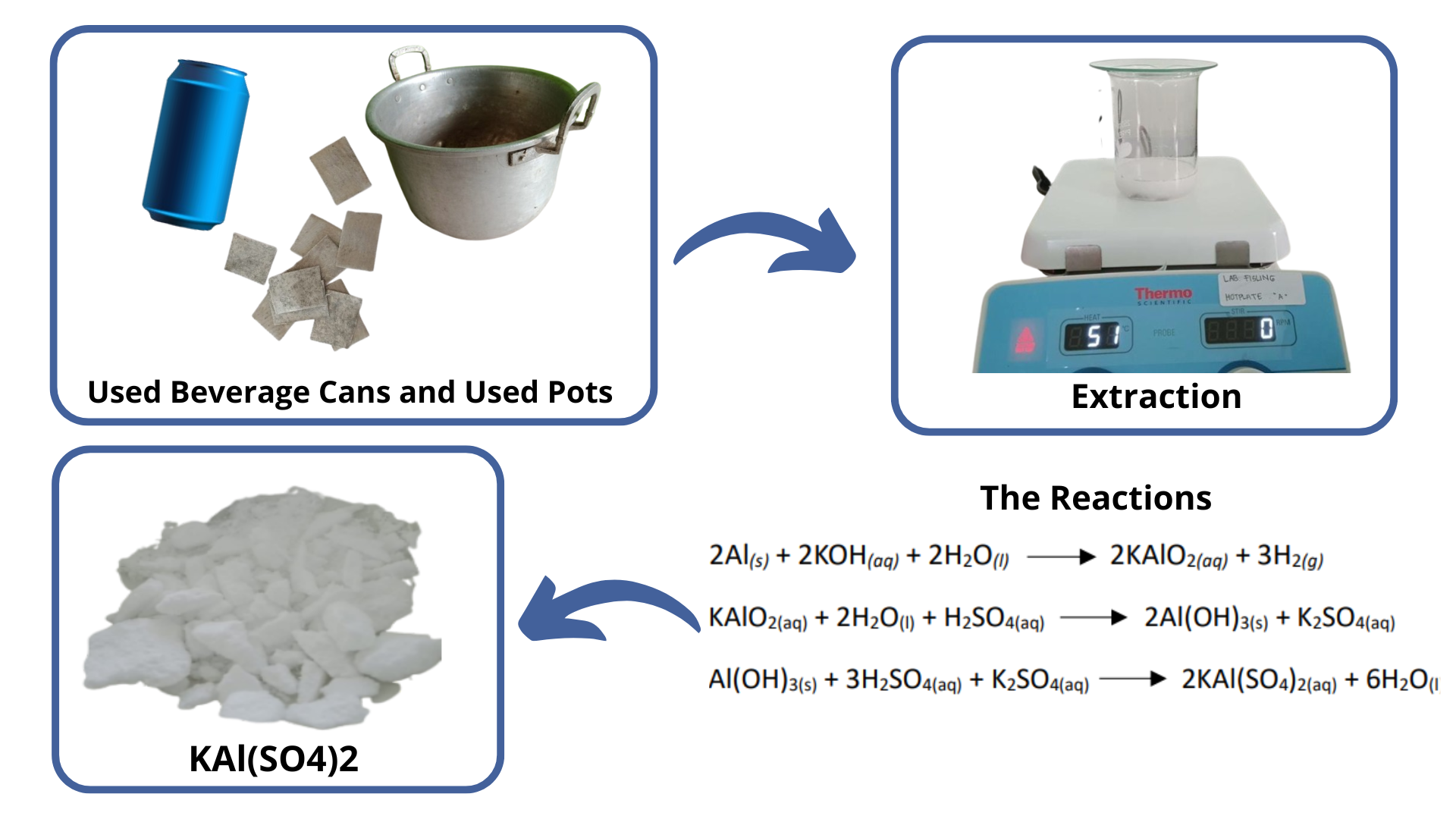
Used pots and beverage cans are good sources of aluminum-rich raw materials for the synthesis of potassium aluminum sulfate (KAl(SO4)2), a solid coagulant. The synthesis process includes preparation, dissolution, extraction, sedimentation, and drying. Therefore, this research aimed to determine the characteristics of KAl(SO4)2 synthesized from aluminum pots and beverage cans waste, adjusted to the quality requirements of commercial KAl(SO4)2 according to SNI 06-2102-1991 standard. The materials used were aluminum pots, as well as a mixture of pots and beverage cans, with varying concentrations of 20%, 30%, and 40% KOH solvent. The synthesis results, characterized by XRF (X-ray fluorescence), showed an Al content of 0.001-3%. In addition, the results of the data analysis, adapted to SNI 06-2102-1991 standard for potassium aluminum sulfate, indicated that the synthesis met the required parameters for water-insoluble parts, Fe, Pb, and As, and Al2SO3, which was close to the quality requirements.

References
[2] KLHK. (2022). Sistem Informasi Pengelolaan Sampah Nasional (SIPSN) Komposisi Sampah Berdasarkan Sumber Sampah. Retrieved January 17, 2023, from https://sipsn.menlhk.go.id/sipsn/
[5] Said, N. I. (2017). Teknologi Pengolahan Air Limbah Teori dan Aplikasi. Jakarta: Penerbit Erlangga.
[6] Witaryanto, T. S., & Idzati, E. M. (2017). Inovasi Pembuatan Tawas dari Limbah Kaleng Bekas. Institut Teknologi Sepuluh Nopember.
[8] Saputra, A. D. (2012). Sintesis Tawas Kalium Aluminium Sulfat (Kal(SO4)2.12H2O) Dari Kaleng Bekas Minuman Sebagai Zat Penjernih Air. Universitas Pakuan Bogor.
[17] Fitri, N. (2017). Sintesis Kristal Tawas [KAl(SO4)2.12H2O] dari Limbah Kaleng Bekas Minuman. Universitas Islam Negeri Alauddin.
Downloads
Published
How to Cite
Issue
Section
License
Copyright (c) 2024 CHEESA: Chemical Engineering Research Articles

This work is licensed under a Creative Commons Attribution-NonCommercial-ShareAlike 4.0 International License.
- Previous License: Creative Commons Attribution-NonCommercial-ShareAlike (CC BY-NC-SA)
- New License: Creative Commons Attribution (CC BY 4.0)
Previous copyright: With the receipt of the article by CHEESA Editorial Board and the decision to be published, the copyright regarding the article will be transferred to CHEESA Journal. CHEESA has the right to multiply and distribute the article and every author is not allowed to publish the same article that was published in this journal.
New Copyright: Authors who publish with this journal agree to the following terms:
Authors retain copyright and grant the journal right of first publication with the work simultaneously licensed under a Creative Commons Attribution License (CC BY 4.0) that allows others to share the work with an acknowledgement of the work's authorship and initial publication in this journal.